When you wake up with a persistent cough, need a routine check-up, or finally decide to manage that lingering blood pressure issue, who do you call first? For most people, the answer is or should be their primary care doctor. Yet despite being the backbone of modern healthcare, primary care remains one of the most misunderstood and underutilized services in medicine.
Primary care is more than just a clinic visit. It’s a long-term partnership with a healthcare provider who knows your medical history, understands your lifestyle, and helps you stay healthy at every stage of life. In this guide, we’ll break down what primary care really is, what services it includes, and why having a dedicated primary care physician can dramatically improve your health outcomes and even add years to your life.
What Is Primary Care?
Primary care is the first point of contact between a patient and the healthcare system. It focuses on whole-person, continuous, and coordinated care, meaning your provider doesn’t just treat individual symptoms but looks at your overall well-being over time.
A primary care physician (PCP) is typically a family medicine doctor, internist, pediatrician, or nurse practitioner trained to handle a wide range of medical concerns. They diagnose common illnesses, manage chronic conditions, provide preventive healthcare, and refer you to specialists when necessary.
Think of your PCP as the quarterback of your healthcare team. They coordinate everything from routine screenings to specialist referrals, ensuring nothing falls through the cracks.
Core Primary Care Services
Primary care services cover a broad spectrum of medical needs. While exact offerings vary by clinic, most primary healthcare providers deliver:
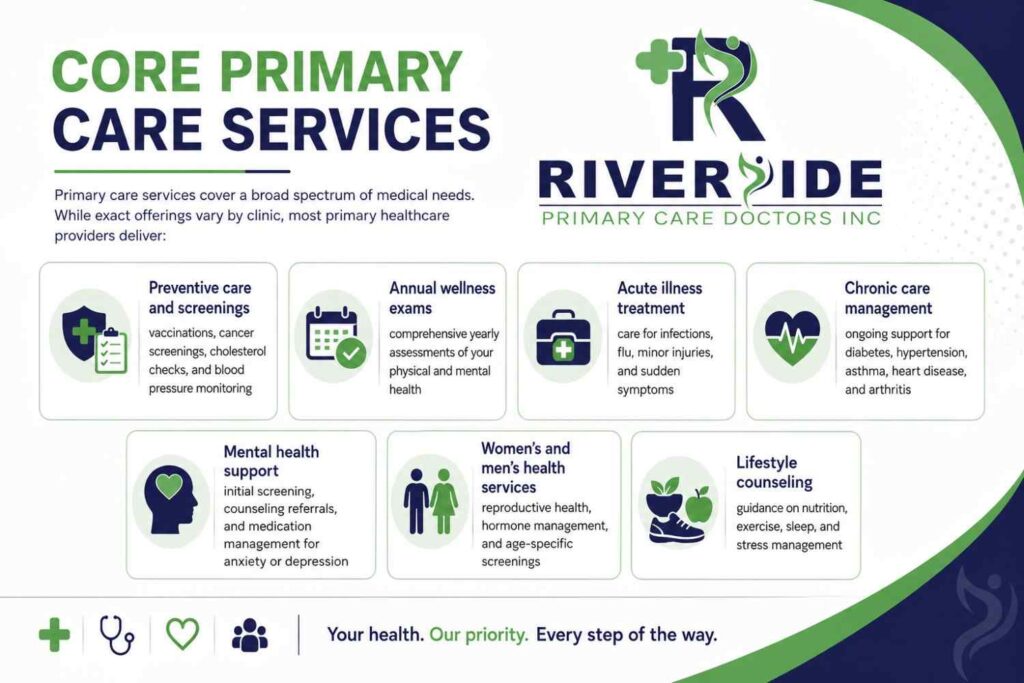
- Preventive care and screenings: vaccinations, cancer screenings, cholesterol checks, and blood pressure monitoring
- Annual wellness exams: comprehensive yearly assessments of your physical and mental health
- Acute illness treatment: care for infections, flu, minor injuries, and sudden symptoms
- Chronic care management: ongoing support for diabetes, hypertension, asthma, heart disease, and arthritis
- Mental health support: initial screening, counseling referrals, and medication management for anxiety or depression
- Women’s and men’s health services: reproductive health, hormone management, and age-specific screenings
- Lifestyle counseling: guidance on nutrition, exercise, sleep, and stress management
- Health coordination: referrals to specialists, lab work, and follow-ups
This holistic approach is why family medicine services and adult primary care remain the foundation of any strong healthcare system.
Types of Primary Care Physicians
Not all primary care doctors are the same. Choosing the right one depends on your age, family situation, and specific health needs.
| Type of Provider | Who They Treat | Best For |
|---|---|---|
| Family Medicine Physician | All ages, from infants to seniors | Families wanting one provider for everyone |
| Internal Medicine (Internist) | Adults 18 and older | Adult primary care and complex chronic conditions |
| Pediatrician | Infants, children, teens | Childhood development and immunizations |
| Geriatrician | Older adults (typically 65+) | Aging-related health concerns |
| Nurse Practitioner / Physician Assistant | Varies by training | Routine and preventive care, often more accessible |
For most households, a family primary care provider offers the convenience of having a single doctor for the entire family making appointments easier and care more continuous.
Why Primary Care Is So Important
Skipping regular primary care visits might seem harmless when you feel healthy. But the real value of primary care lies in what it prevents not just what it treats.
1. Early Detection Saves Lives
Many serious conditions including cancer, diabetes, and heart disease — develop silently. Regular visits to a preventive care clinic allow your provider to catch warning signs early through routine screenings and lab work, when treatment is most effective and least invasive.
2. Better Management of Chronic Conditions
If you live with a long-term condition like high blood pressure, diabetes, or asthma, structured chronic care management makes a measurable difference. Consistent monitoring helps you stay on track with medications, avoid complications, and reduce emergency room visits.
3. Lower Healthcare Costs
Research consistently shows that people with a regular primary care physician spend less on healthcare overall. Why? Because preventive care is far cheaper than emergency treatment. Catching a problem at a $150 office visit beats a $15,000 hospital stay.
4. Stronger Doctor-Patient Relationships
When your doctor knows your history, family background, and personality, they make better decisions. A trusted provider can spot subtle changes a shift in mood, weight, or behavior that a stranger in an urgent care clinic would never notice.
5. Mental and Emotional Well-Being
Modern primary care isn’t just about physical health. Today’s primary healthcare providers screen for anxiety, depression, burnout, and stress-related conditions, making it easier to get help before issues escalate.
What Happens During an Annual Wellness Exam?
An annual wellness exam is one of the most valuable yet underused tools in healthcare. It’s not just a quick check it’s a roadmap for your year ahead.
During a typical visit, your provider will:
- Review your personal and family medical history
- Check vital signs (blood pressure, heart rate, BMI)
- Conduct age- and gender-appropriate screenings
- Update vaccinations
- Order necessary lab tests
- Discuss lifestyle factors like diet, exercise, sleep, and stress
- Address mental health concerns
- Set personalized health goals for the coming year
Even if you feel completely healthy, this annual touchpoint creates a baseline that helps your doctor detect changes over time.
How to Choose the Right Primary Care Physician
Finding the right PCP is a personal decision. Here are practical factors to consider:
- Credentials and specialty: Make sure they’re board-certified in family medicine, internal medicine, or pediatrics depending on your needs
- Location and availability: A nearby clinic with flexible hours encourages consistent visits
- Insurance compatibility: Confirm they’re in-network to avoid unexpected costs
- Communication style: You should feel comfortable asking questions and discussing sensitive topics
- Telehealth options: Modern clinics often offer virtual visits for quick follow-ups
- Patient reviews: Look for feedback on bedside manner, wait times, and staff responsiveness
Don’t hesitate to schedule a meet-and-greet visit before committing. The right provider should feel like a partner, not just a service.
Primary Care vs. Urgent Care vs. Emergency Room
People often confuse these three, but they serve very different purposes.
| Service Type | Best For | Cost | Wait Time |
|---|---|---|---|
| Primary Care | Routine care, chronic conditions, preventive checkups | Low | Scheduled appointments |
| Urgent Care | Non-life-threatening issues needing same-day attention | Moderate | 15–60 minutes |
| Emergency Room | Life-threatening conditions (chest pain, severe injury, stroke symptoms) | High | Varies (priority-based) |
Using primary care as your first stop when appropriate saves time, money, and stress.
The Future of Primary Care
Primary care is evolving rapidly. Telehealth, AI-assisted diagnostics, remote patient monitoring, and integrated electronic health records are making care more accessible than ever. Patients can now message their providers, refill prescriptions, and review lab results from a smartphone.
Yet despite all this technology, the heart of primary care remains the same: a trusting relationship between you and a provider who genuinely cares about your long-term health.
FAQs:
How often should I see my primary care physician?
Most healthy adults should schedule an annual wellness exam each year. If you have chronic conditions, you may need visits every three to six months as recommended by your provider.
Can I see a primary care provider without insurance?
Yes. Many preventive care clinics offer self-pay rates, sliding-scale fees, or membership-based models. Community health centers also provide affordable primary care regardless of insurance status.
Is family medicine the same as primary care?
Family medicine is one type of primary care. Family physicians treat patients of all ages, while internal medicine doctors focus on adults and pediatricians focus on children. All three fall under the umbrella of primary care.
What should I bring to my first primary care visit?
Bring a photo ID, insurance card, a list of current medications and supplements, your medical and family history, and any recent lab results or specialist notes. A list of questions or concerns helps make the most of your appointment.
Can primary care doctors treat mental health conditions?
Yes. Primary care providers commonly screen for and treat conditions like anxiety, depression, and stress. They can prescribe medications, provide initial counseling, and refer you to mental health specialists when needed.
Final Thoughts
Primary care isn’t just a routine, it’s a long-term investment in your health, your family’s well-being, and your future. From preventive healthcare and annual wellness exams to chronic care management and mental health support, a strong relationship with a primary care physician can transform how you experience medicine.
If you don’t currently have a primary care provider, now is the time to find one. Building that relationship before you need urgent help is one of the smartest health decisions you can make.




Benefits of Having a Primary Care Physician - Riverside Primary Care Doctors Inc
[…] Read More: What Is Primary Care […]