
Healthcare can feel overwhelming, especially when you are trying to manage preventive care, chronic conditions, urgent concerns, and specialist visits all at once. That is where a primary care physician (PCP) becomes essential. A trusted PCP acts as your first point of contact for medical care, helping you stay healthier through prevention, early diagnosis, and coordinated treatment.
Whether you are managing a long-term condition or simply want a healthcare provider who understands your medical history, having a primary care physician can improve both your health outcomes and overall healthcare experience.
In this guide, we will explore the major benefits of having a primary care physician, how they support long-term wellness, and why establishing a relationship with one is an important step toward better healthcare.
What Is a Primary Care Physician?
A primary care physician is a healthcare provider who manages your general medical needs. They provide preventive care, diagnose illnesses, treat common conditions, monitor chronic diseases, and coordinate specialist referrals when necessary.
Primary care physicians may specialize in:
- Family medicine
- Internal medicine
- Pediatrics
- Geriatric care
They often become the central figure in your healthcare journey, offering continuous and personalized medical support over time.
Read More: What Is Primary Care
Why Having a Primary Care Physician Matters
Many people only visit healthcare providers when they are sick. However, consistent care from a PCP offers much more than occasional treatment. It creates a proactive healthcare strategy focused on prevention, continuity, and personalized care.
Key Benefits at a Glance
| Benefit | Why It Matters |
|---|---|
| Preventive care | Helps detect health issues early |
| Personalized treatment | Care based on your medical history |
| Better chronic disease management | Ongoing monitoring and support |
| Coordinated healthcare | Easier referrals and specialist communication |
| Lower healthcare costs | Fewer emergency room visits and unnecessary tests |
| Improved long-term health outcomes | Consistent care improves wellness over time |
Top Benefits of Having a Primary Care Physician
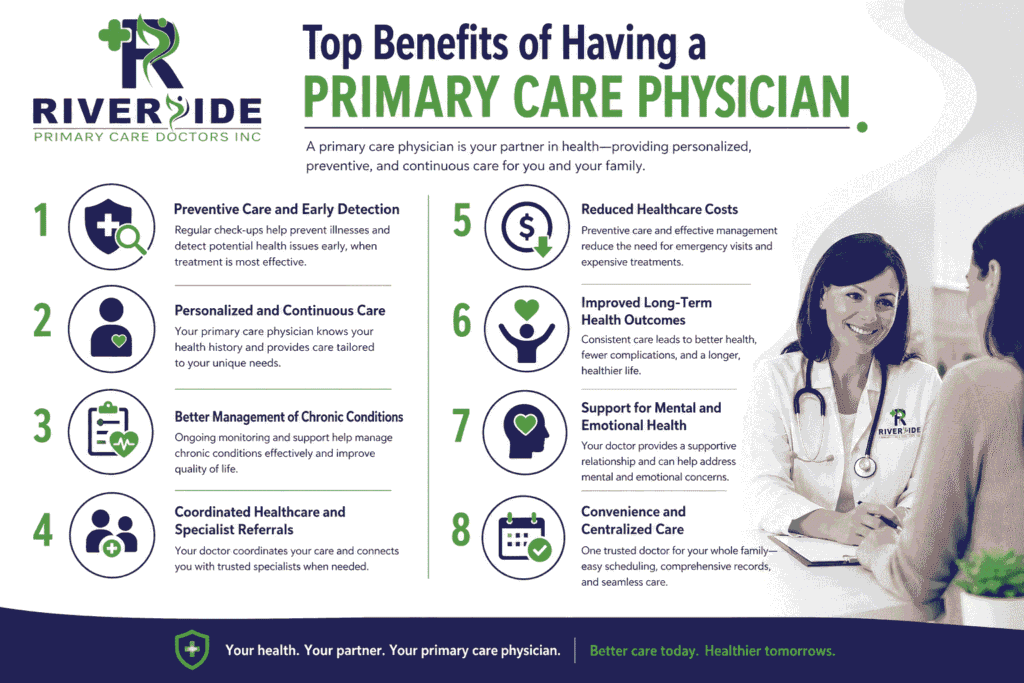
1. Preventive Care and Early Detection
One of the biggest advantages of having a PCP is access to preventive healthcare services. Preventive care focuses on identifying health risks before they become serious problems.
Your primary care physician may recommend:
- Annual wellness exams
- Routine blood work
- Blood pressure screenings
- Cholesterol testing
- Cancer screenings
- Vaccinations
- Lifestyle counseling
Early detection can significantly improve treatment outcomes for conditions such as diabetes Treatment, hypertension, heart disease, and certain cancers.
Why Prevention Matters
Many serious health conditions develop gradually without obvious symptoms. Regular checkups allow your physician to identify subtle warning signs early and begin treatment sooner.
2. Personalized and Continuous Care
A primary care physician gets to know your:
- Medical history
- Family history
- Lifestyle habits
- Medications
- Allergies
- Mental health concerns
This long-term relationship allows them to provide more personalized and effective treatment recommendations.
Unlike urgent care clinics that treat isolated issues, PCPs view your health as a complete picture. This continuity often leads to more accurate diagnoses and better treatment decisions.
3. Better Management of Chronic Conditions
Chronic illnesses require ongoing monitoring and consistent care. A PCP plays a critical role in helping patients manage long-term conditions such as:
- Diabetes
- High blood pressure
- Asthma
- Heart disease
- Arthritis
- Thyroid disorders
Your physician can:
- Adjust medications
- Track symptoms
- Monitor lab results
- Recommend lifestyle changes
- Prevent complications
Consistent follow-up appointments help improve disease control and overall quality of life.
4. Coordinated Healthcare and Specialist Referrals
Modern healthcare often involves multiple providers. Without coordination, patients may experience fragmented care, duplicate testing, or communication gaps.
A primary care physician helps organize your healthcare by:
- Referring you to appropriate specialists
- Sharing medical records
- Coordinating treatment plans
- Reviewing medications
- Monitoring overall progress
This coordination reduces confusion and helps ensure safer, more effective care.
5. Reduced Healthcare Costs
Many healthcare issues become more expensive when they are ignored or treated too late. Preventive care and early intervention can reduce the need for:
- Emergency room visits
- Hospitalizations
- Advanced procedures
- Unnecessary diagnostic tests
Patients who regularly see a PCP often experience lower overall healthcare costs because problems are addressed before they escalate.
Cost-Saving Examples
| Preventive Action | Potential Costly Outcome Avoided |
|---|---|
| Blood pressure monitoring | Stroke or heart attack |
| Diabetes management | Kidney damage or hospitalization |
| Routine screenings | Late-stage disease treatment |
| Vaccinations | Serious infectious illnesses |
6. Improved Long-Term Health Outcomes
Research consistently shows that people with regular access to primary care tend to experience:
- Better overall health
- Longer life expectancy
- Lower mortality rates
- Fewer hospital admissions
- Improved chronic disease outcomes
The ongoing physician-patient relationship encourages healthier behaviors and better adherence to treatment plans.
7. Support for Mental and Emotional Health
Primary care physicians do not only treat physical illnesses. They also help identify and manage mental health concerns such as:
- Anxiety
- Depression
- Stress-related conditions
- Sleep disorders
Because PCPs often know their patients well, they can recognize changes in behavior or mood that may otherwise go unnoticed.
Many patients feel more comfortable discussing sensitive health concerns with a physician they trust.
8. Convenience and Centralized Care
Having a dedicated PCP creates a central hub for your healthcare needs. Instead of searching for new providers every time an issue arises, you have a trusted medical professional who already understands your health history.
This can make healthcare:
- Faster
- More efficient
- Less stressful
- More consistent
Many primary care practices also offer telehealth appointments, online portals, and easier prescription management.
Who Should Have a Primary Care Physician?
Everyone can benefit from having a PCP, including:
- Young adults
- Families with children
- Adults managing chronic conditions
- Seniors
- Individuals focused on preventive health
Even healthy individuals benefit from regular checkups and preventive screenings.
How to Choose the Right Primary Care Physician
Finding the right PCP is important for building a comfortable and long-term healthcare relationship.
Factors to Consider
Experience and Credentials
Choose a board-certified physician with experience relevant to your healthcare needs.
Communication Style
Look for someone who listens carefully, explains clearly, and makes you feel comfortable asking questions.
Insurance Compatibility
Verify that the provider accepts your insurance plan.
Accessibility
Consider office location, appointment availability, and telehealth options.
Patient Reviews
Online reviews can provide insight into patient experiences and office efficiency.
Signs You Should Schedule a Primary Care Visit
You should consider establishing care with a PCP if you:
- Have not had a checkup in over a year
- Need help managing medications
- Experience ongoing symptoms
- Want preventive screenings
- Have a chronic health condition
- Frequently visit urgent care centers
Regular visits can help maintain your health and reduce future complications.
Common Misconceptions About Primary Care Physicians
“I Only Need a Doctor When I’m Sick”
Preventive healthcare is one of the most important reasons to have a PCP. Routine visits help identify risks before symptoms appear.
“Urgent Care Is Enough”
Urgent care clinics are useful for short-term medical issues, but they do not provide comprehensive, long-term healthcare management.
“Healthy People Don’t Need Primary Care”
Even healthy individuals need screenings, vaccinations, and health monitoring to maintain long-term wellness.
The Growing Importance of Preventive Healthcare
Healthcare is shifting toward prevention and long-term wellness rather than reactive treatment. Primary care physicians are at the center of this approach.
By helping patients build healthier habits, monitor risks, and receive timely care, PCPs contribute to stronger long-term health outcomes and improved quality of life.
FAQs
What does a primary care physician do?
A primary care physician provides preventive care, diagnoses illnesses, manages chronic conditions, prescribes medications, and coordinates specialist referrals.
How often should I see a primary care physician?
Most adults should schedule an annual wellness visit. Individuals with chronic conditions may need more frequent appointments.
Can a primary care physician treat mental health conditions?
Yes. Many PCPs diagnose and manage common mental health concerns such as anxiety, depression, and stress-related conditions.
Is a family doctor the same as a primary care physician?
A family doctor is one type of primary care physician. PCPs may also specialize in internal medicine, pediatrics, or geriatrics.
Do I need a primary care physician if I rarely get sick?
Yes. Preventive care, screenings, and health monitoring are important even for healthy individuals.
Can a PCP help coordinate specialist care?
Absolutely. Primary care physicians often manage referrals, review specialist reports, and help coordinate treatment plans.
Final Thoughts
Having a primary care physician offers far more than occasional medical treatment. It provides a long-term healthcare partnership focused on prevention, personalized care, chronic disease management, and overall wellness.
A trusted PCP can help you navigate the healthcare system more effectively while improving your long-term health outcomes and reducing unnecessary medical costs.
If you have not established care with a primary care physician yet, now is a good time to take that step toward more proactive and personalized healthcare.