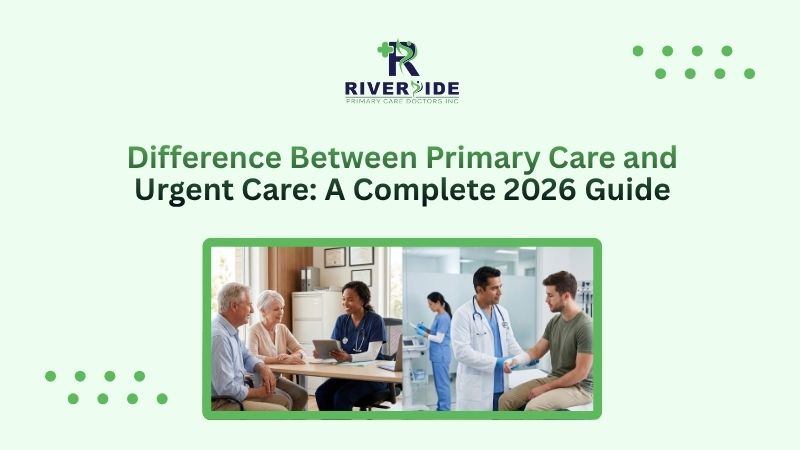
Understanding the difference between primary care and urgent care is essential for making the right healthcare decisions, especially when symptoms appear suddenly or when ongoing health management is needed. Many patients often struggle to decide where to go: a clinic they know or a nearby urgent facility that offers quick treatment.
What Is Primary Care?
Primary care is your long-term healthcare foundation. It focuses on prevention, ongoing treatment, and overall health management.
A Primary Care Doctor is typically your first point of contact for non-emergency medical needs and coordinates your overall care over time.
Key Responsibilities of Primary Care:
- Routine checkups and annual physicals
- Preventive screenings (diabetes, cholesterol, blood pressure)
- Managing chronic diseases (asthma, hypertension, diabetes)
- Vaccinations and immunizations
- Referrals to specialists when needed
Common Primary Care Settings:
- Family medicine clinics
- Internal medicine practices
- Pediatric clinics
Read More: Benefits of Having a Primary Care Physician
What Is Urgent Care?
Urgent care is designed for immediate but non-life-threatening medical issues. It fills the gap between primary care and emergency rooms.
Urgent care clinics provide walk-in, same-day treatment for conditions that cannot wait for a scheduled appointment.
Common Services in Urgent Care:
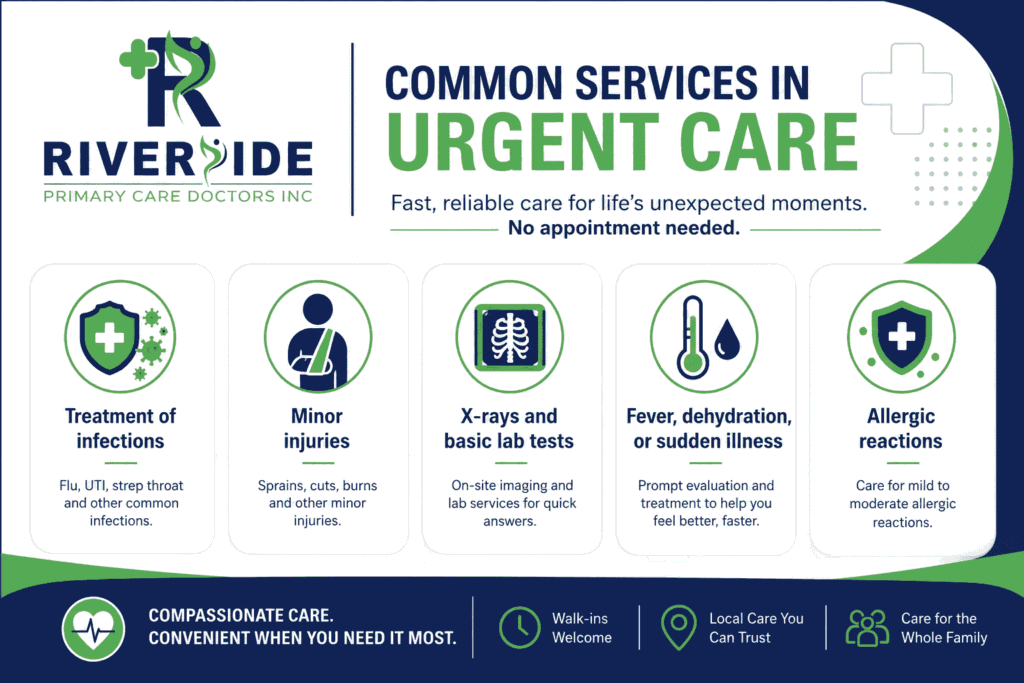
- Treatment of infections (flu, UTI, strep throat)
- Minor injuries (sprains, cuts, burns)
- X-rays and basic lab tests
- Fever, dehydration, or sudden illness
- Allergic reactions (mild to moderate)
When Urgent Care Is Used:
- After-hours medical needs
- When your primary doctor is unavailable
- Non-emergency situations requiring fast attention
Primary Care vs Urgent Care: Key Differences
Here’s a clear comparison to help you understand both better:
| Feature | Primary Care | Urgent Care |
|---|---|---|
| Purpose | Long-term health management | Immediate, short-term treatment |
| Appointment | Scheduled visits | Walk-in availability |
| Relationship | Ongoing doctor-patient relationship | No long-term relationship |
| Care Type | Preventive & chronic care | Acute illness & minor injuries |
| Availability | Office hours | Extended hours, weekends |
| Cost | Generally lower | Moderate (higher than primary care) |
| Continuity | High continuity of care | No continuity |
When Should You Choose Primary Care?
Choose primary care when you need:
- Routine health checkups
- Chronic disease management
- Long-term medication monitoring
- Preventive screenings
- Vaccinations and wellness planning
Example Scenario:
If you have diabetes and need regular monitoring or medication adjustments, your Primary Care Doctor is the best choice.
Read More: How Primary Care Improves Long-Term Health
When Should You Choose Urgent Care?
Urgent care is appropriate when:
- You have a sudden illness that is not life-threatening
- You need treatment outside regular office hours
- Your primary care provider is unavailable
Example Scenario:
You wake up with a high fever and sore throat on a weekend, urgent care is the right option.
When Neither Is Enough: Emergency Care
Some conditions should never be treated at urgent care or primary care clinics:
- Chest pain or signs of heart attack
- Severe breathing difficulties
- Stroke symptoms (slurred speech, facial drooping)
- Major trauma or bleeding
In these cases, always go to the emergency room or call emergency services.
Practical Decision Guide (Quick Checklist)
Use this simple checklist:
Choose Primary Care if:
- Condition is ongoing or preventive
- You need long-term care or follow-up
- It’s a routine health concern
Choose Urgent Care if:
- Condition is sudden but not life-threatening
- You need same-day treatment
- Your doctor is not available
Go to ER if:
- Life-threatening symptoms appear
- Severe pain or trauma occurs
Cost & Insurance Differences
Understanding cost helps avoid unexpected bills:
Primary Care:
- Lower co-pays
- Often fully covered under insurance preventive care
- Cost-effective for long-term health
Urgent Care:
- Higher co-pays than primary care
- Additional charges for tests (X-rays, labs)
- Still cheaper than ER visits
Why Choosing the Right Care Matters
Selecting the correct care type can help you:
- Reduce unnecessary medical costs
- Receive faster and more appropriate treatment
- Avoid long emergency room wait times
- Improve long-term health outcomes
Key Takeaways
- Primary care focuses on long-term health and prevention
- Urgent care focuses on immediate, non-emergency treatment
- Both serve different but complementary roles in healthcare
- Knowing where to go saves time, money, and improves care quality
- A Primary Care Doctor is essential for ongoing health management and coordination
FAQs
1. What is the main difference between primary care and urgent care?
Primary care focuses on long-term health and prevention, while urgent care treats immediate but non-life-threatening conditions.
2. Can urgent care replace a primary care doctor?
No. Urgent care is temporary and episodic, while primary care provides continuous and preventive healthcare.
3. Is urgent care more expensive than primary care?
Yes, urgent care typically has higher co-pays and service charges compared to primary care visits.
4. Do urgent care centers have doctors?
Yes, urgent care clinics are usually staffed by physicians, nurse practitioners, and physician assistants.
5. When should I go to urgent care instead of the emergency room?
Go to urgent care for minor injuries or illnesses that require quick attention but are not life-threatening.
6. Why is primary care important for long-term health?
Primary care helps detect diseases early, manages chronic conditions, and coordinates overall healthcare.
Conclusion
Understanding the difference between primary care and urgent care empowers you to make smarter healthcare decisions. Primary care is your long-term partner in health management, while urgent care is your go-to solution for immediate but non-emergency conditions.
Choosing the right option not only saves time and money but also ensures you receive the most appropriate level of care when you need it most.
Looking for reliable, patient-focused primary healthcare in your area?
RiverSide Primary Care Doctors Inc is proudly providing comprehensive Primary Care Treatment in Riverside, CA, offering personalized care for individuals and families. From preventive checkups and chronic disease management to ongoing wellness support, our team is committed to helping you stay healthy at every stage of life.
Schedule your appointment with RiverSide Primary Care Doctors Inc and experience trusted, compassionate primary care in Riverside, CA.